 Anhui Xingtong Technology Co., Ltd

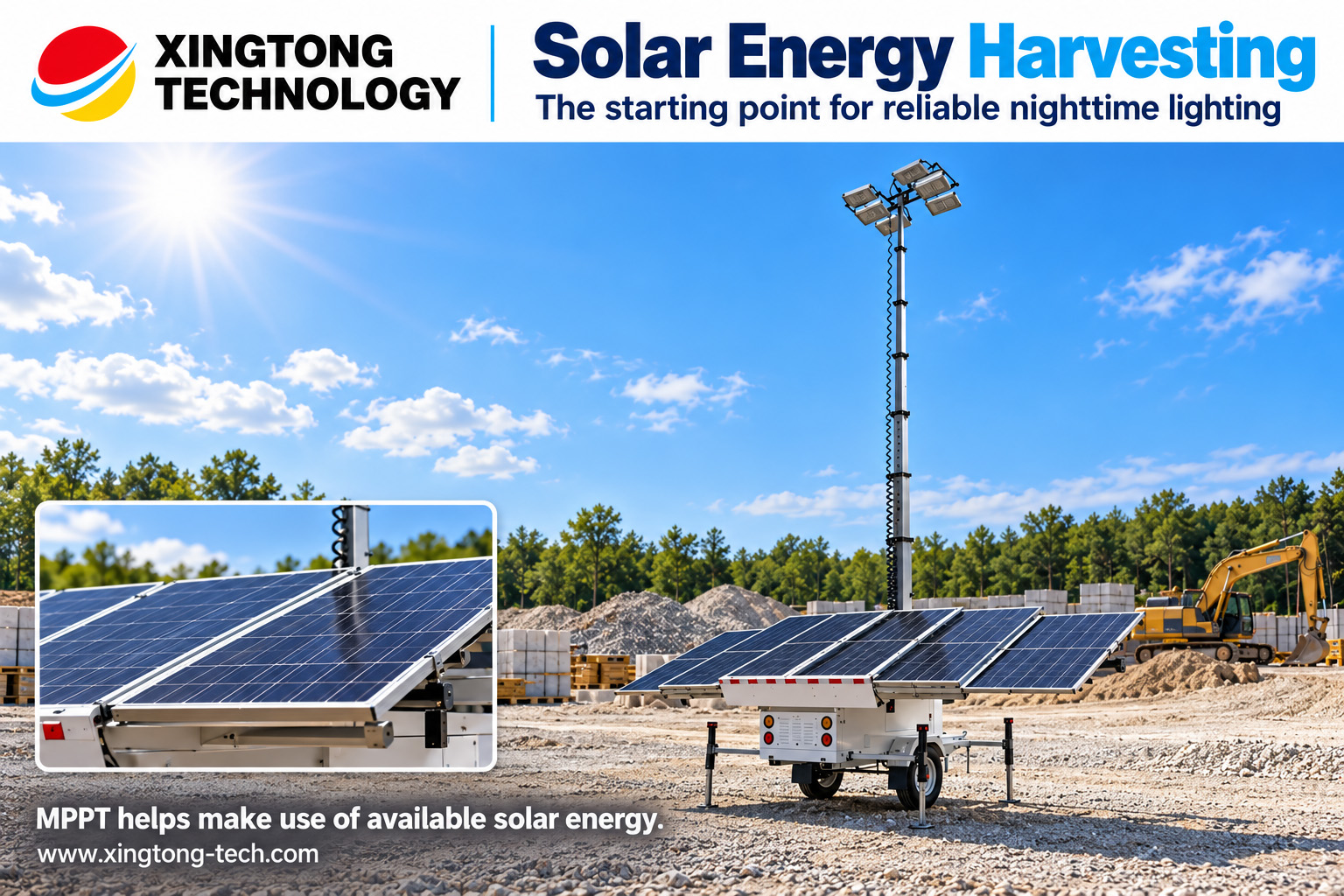
For buyers evaluating mobile solar lighting towers from Anhui Xingtong Technology, reliable nighttime operation starts with the energy collected during the day. Solar-panel wattage and battery capacity both matter, but the charging controller also affects how effectively the system uses available sunlight.
An MPPT controller helps manage that connection between the solar array and the battery. Understanding its role makes it easier to compare lighting-tower proposals and select a configuration for the intended site.
How Does an MPPT Controller Work?
MPPT stands for Maximum Power Point Tracking. A photovoltaic panel has an operating point where the combination of voltage and current produces its highest available power. That point changes with sunlight and panel temperature.
An MPPT controller adjusts the array's operating voltage to seek this point, then converts the collected power to the voltage and current required for battery charging. It helps use the available solar resource; it does not increase the sunlight reaching the panels.
MPPT vs PWM What Should Buyers Compare?
A PWM charge controller generally brings the solar array's operating voltage close to the battery voltage. An MPPT controller allows the array and battery to operate at different voltages within the controller's specified limits.
|
Comparison |
PWM controller |
MPPT controller |
|
Array operation |
Generally close to battery voltage |
Tracks the array's maximum power point |
|
Panel selection |
Requires closer matching to battery voltage |
Offers greater voltage flexibility within its ratings |
|
Typical trade-off |
Lower upfront cost for suitable small systems |
Additional cost for improved energy harvesting and design flexibility |
There is no universal percentage improvement. The difference depends on panel characteristics, temperature, sunlight, battery voltage and system design. A fixed claim such as “20–30% more energy” needs defined comparison conditions and supporting measurements.
Start with the Lighting Tower's Energy Demand
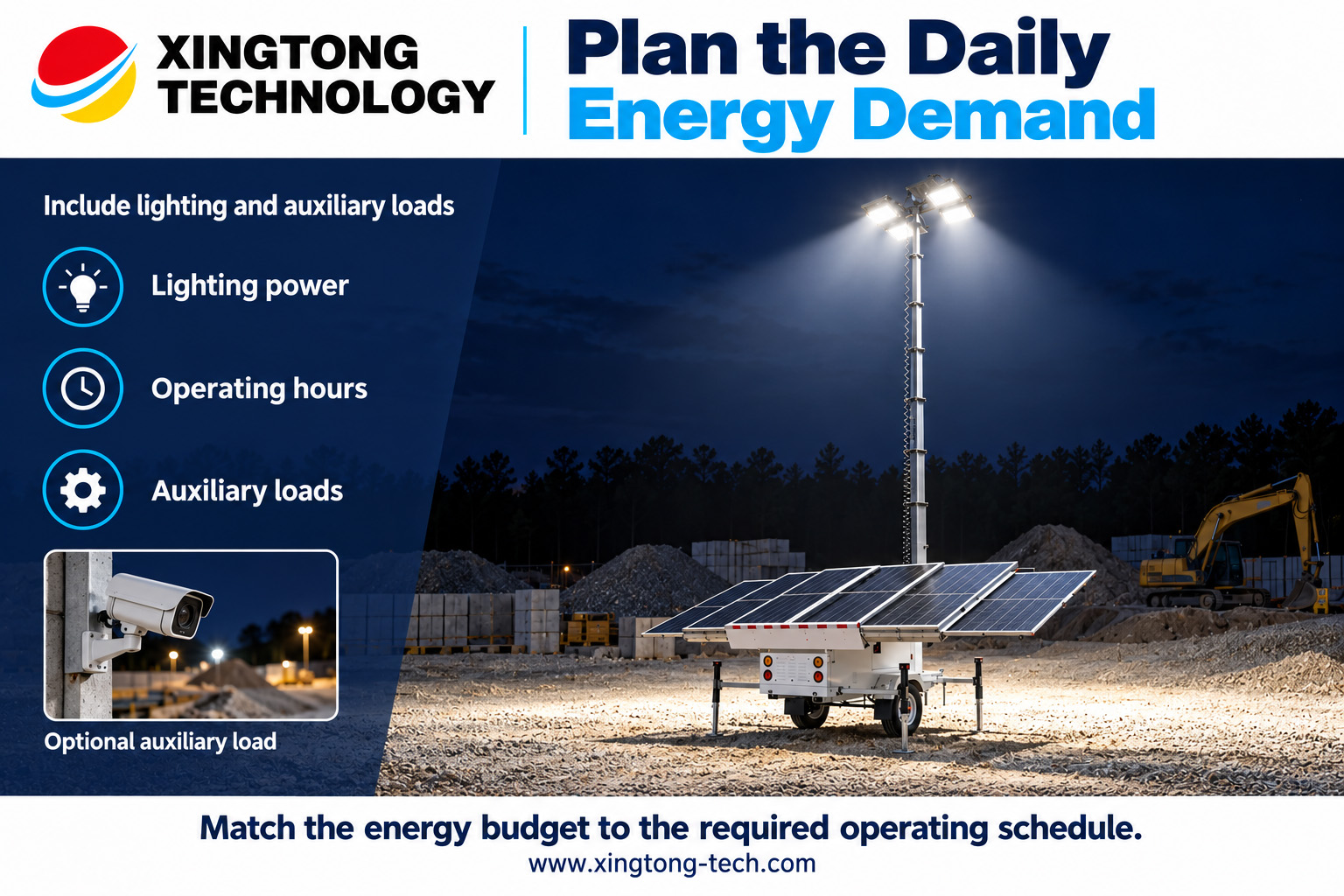
Before choosing a controller, calculate how much energy the tower needs each day.
Lighting energy (kWh) = total lighting power (kW) × operating time (hours).
For example, four 100W lights operating at full power for 10 hours consume 4.0kWh. A 20W camera running continuously adds 0.48kWh per day, bringing the combined load consumption to 4.48kWh before other equipment and system losses.
This is an illustrative calculation, not a measured runtime claim for a particular product. Dimming schedules change the result, while conversion losses, temperature and the permitted battery discharge range affect the required storage capacity.
MPPT can improve the use of available solar energy, but reliable operation still requires an appropriate solar array, usable battery capacity and an allowance for periods of poor sunlight.
Check the Controller's Electrical and Environmental Ratings
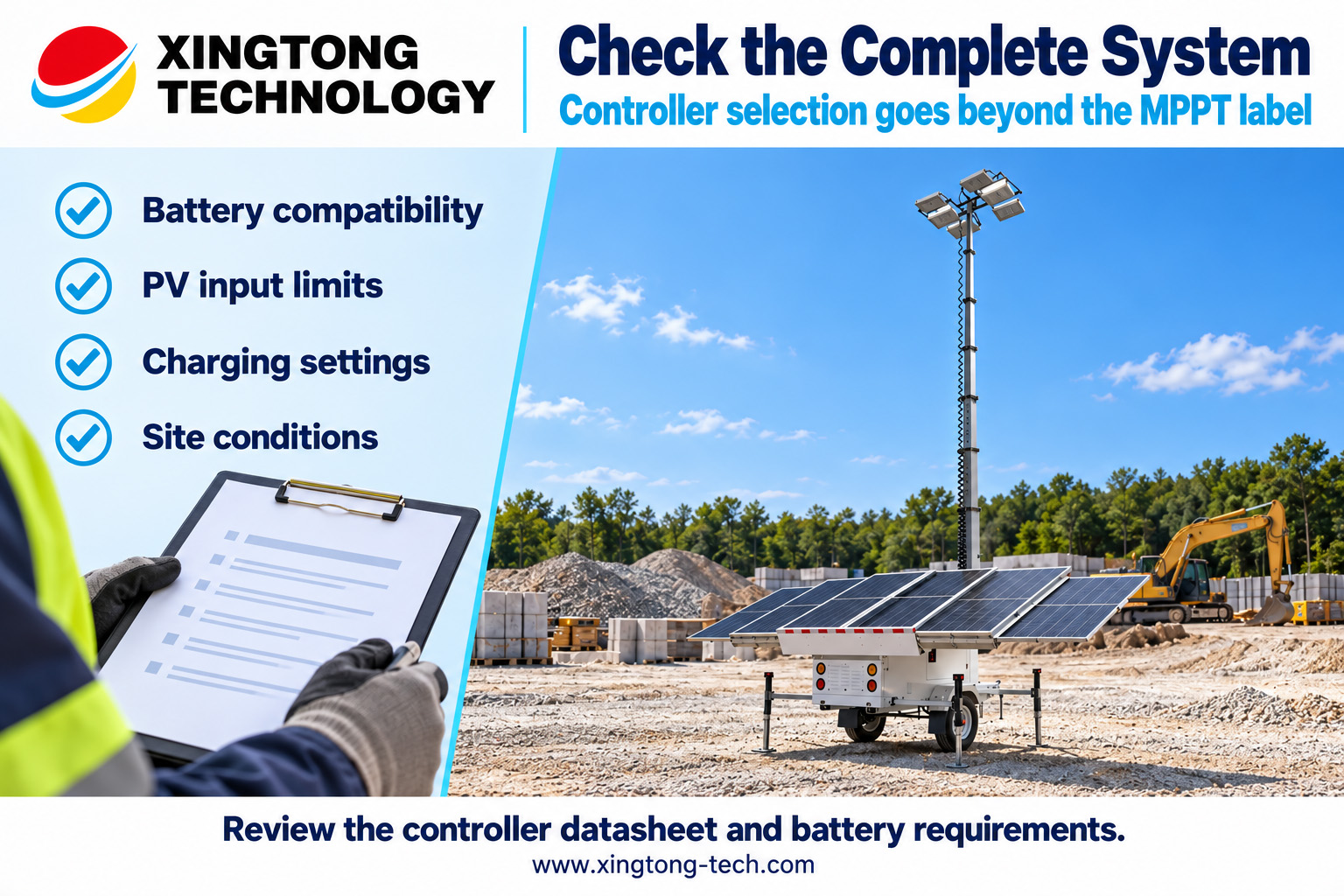
The word “MPPT” alone is not enough to assess a charging system. Ask for the controller model and its datasheet, then check the following items against the proposed tower configuration.
|
Specification |
What to check |
|
Battery voltage |
Compatibility with the selected battery bank |
|
PV voltage |
Maximum array open-circuit voltage, including its increase at low temperatures, stays below the input limit |
|
Tracking range |
Array operating voltage suits the controller across expected temperatures |
|
PV input current |
Parallel strings meet the specified input and short-circuit current limits |
|
Charging current |
Output rating and configured limit suit the array and the battery's permitted charging current |
|
Temperature and enclosure |
Cooling, temperature derating and protection against the site's dust and moisture conditions |
For a mobile unit, also inspect cable restraint, connector accessibility and routing around moving or folding components. These checks help maintain the electrical installation during transport and repeated deployment.
When requesting a lighting-tower proposal from Xingtong Technology, ask for the charging-controller model, battery specifications and intended operating schedule together. This allows the charging system to be assessed alongside the tower's total energy demand.
Match Charging Settings to the Battery
Maximum power tracking and battery protection are related parts of the charging system, but they are different functions.
Charging voltage, current limits and temperature settings must match the battery manufacturer's requirements. Lead-acid and lithium batteries require different settings; lead-acid equalization settings should not be applied to a lithium battery.
For a lithium system, confirm how the controller responds to the battery management system's charging restrictions. Also confirm how low-voltage load disconnection is implemented. An MPPT label does not establish that every required protection is included.
Include Cameras and Other Auxiliary Loads
A lighting tower may also power cameras, communication equipment or sensors. Include their operating hours and startup requirements in the energy budget.
Do not assume that the charging controller provides a regulated supply for every device. Depending on the equipment, the system may need a dedicated DC converter, an inverter or separate load controls. Any controller load output must be checked for voltage compatibility and continuous and startup current capacity.
Solar Lighting Tower Configuration with Xingtong Technology
MPPT is one part of an effective solar lighting tower. Procurement decisions should also consider the daily energy balance, usable battery storage, site conditions, lighting schedule and maintenance access.
Anhui Xingtong Technology offers mobile solar lighting towers with configuration options for different project requirements. To discuss a suitable system, share your project location, required lighting output, nightly operating hours and any auxiliary loads.
Contact info@xingtong-tech.com to request product information and discuss the charging-system configuration for your project.