 Anhui Xingtong Technology Co., Ltd

As electric vehicles become increasingly popular, portable EV chargers are being used for home charging, travel and emergency charging applications. For manufacturers, ensuring stable and reliable charger performance before shipment is an important part of quality control.
For this reason, aging testing is an important step in the production process of 3.5kW portable EV chargers.
What Is EV Charger Aging Testing?
Aging testing, also known as a burn-in test, involves operating the EV charger under controlled conditions for an extended period.
The purpose is to identify potential problems that may not appear during a short functional test, such as unstable components, abnormal temperature rise, connection problems or intermittent operation.
For a portable EV charger, aging testing can help manufacturers verify the stability of the complete charging system before delivery.
Why Is Aging Testing Important?
1. Verify Stable Operation
A 3.5kW portable EV charger may operate continuously during an actual charging session. Aging testing helps verify that the charger can maintain stable operation during extended use.
2. Identify Potential Component Problems
Some component problems may only become noticeable after continuous operation. Aging testing provides an opportunity to identify potential issues before the product is shipped to the customer.
3. Check Temperature Performance
During charging, electrical components generate heat. Monitoring the charger during testing can help identify abnormal temperature increases and potential thermal problems.
4. Improve Product Reliability
Combining functional inspection with aging testing provides an additional layer of quality control. This helps manufacturers improve product consistency for batch production.
Typical Quality Control Process
For Xingtong Technology's portable EV charger production, quality control can include several stages:
Production → Assembly → Functional Inspection → Aging Test → Final Inspection → Packaging → Shipment
Each stage serves a different purpose.
Functional testing verifies whether the charger operates correctly, while aging testing focuses more on stability during continuous operation.
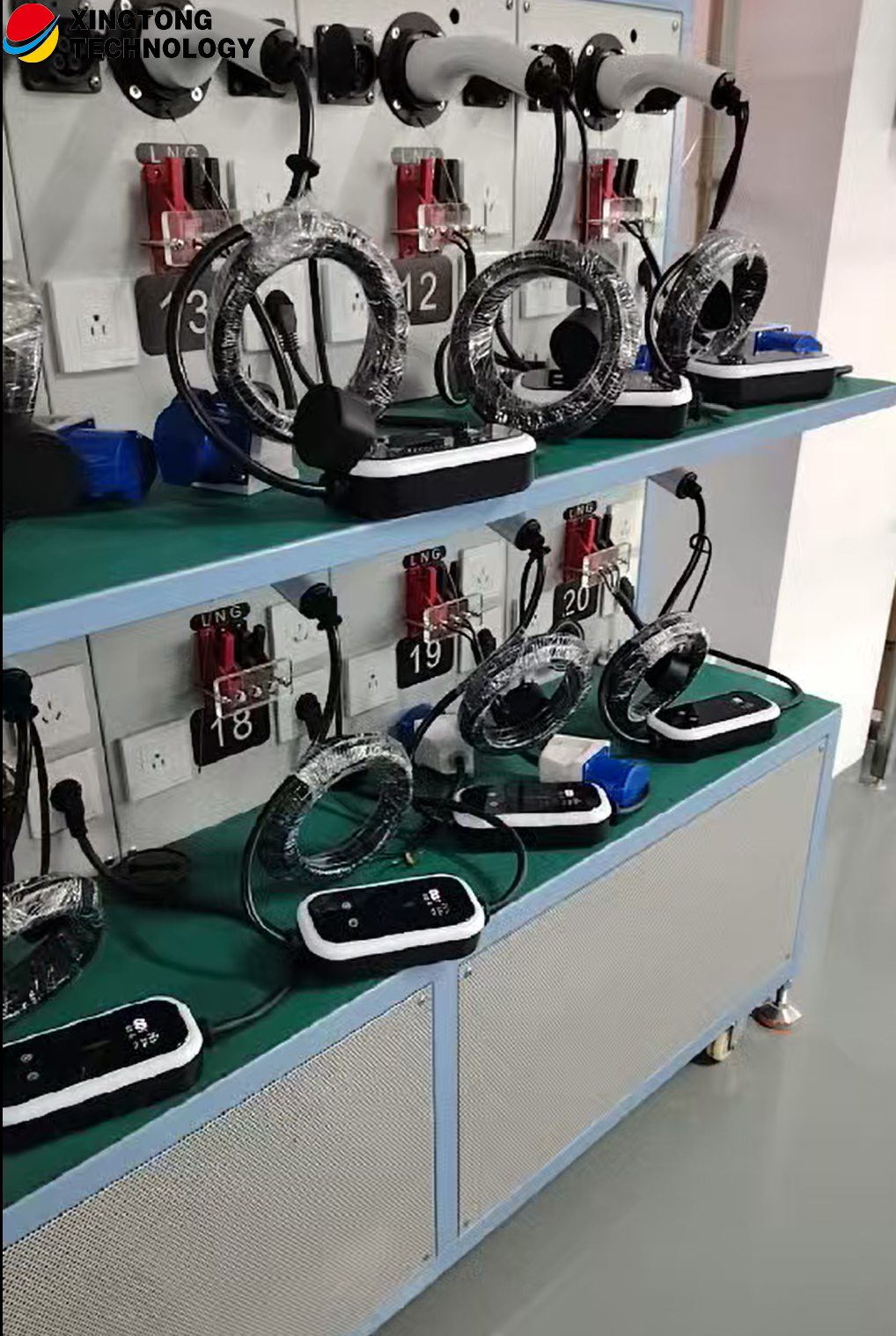
3.5kW Portable EV Charger Quality Inspection
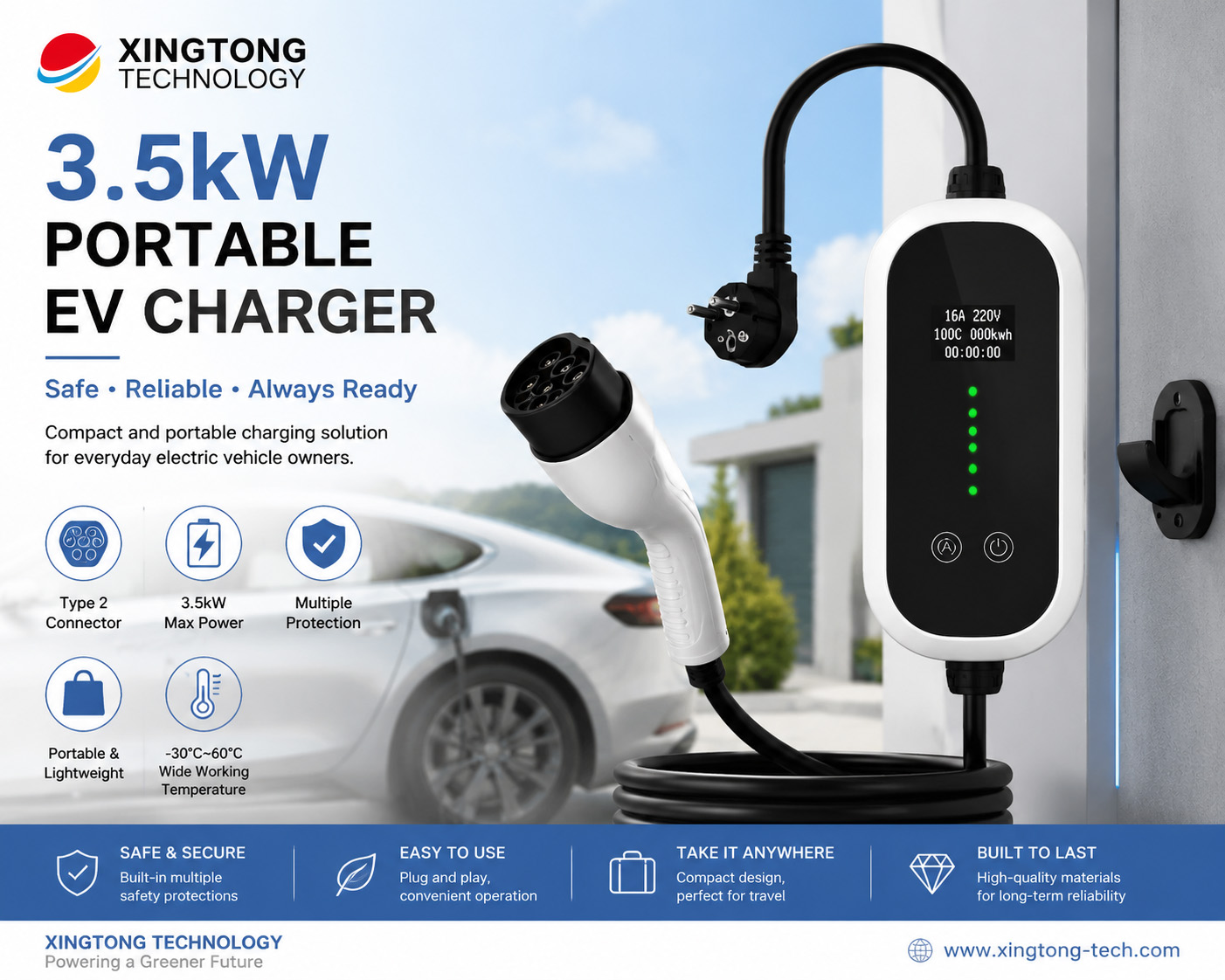
The 3.5kW Portable EV Charger is designed for convenient AC charging applications and is available with a Type 2 connector.
Typical product features include:
- Up to 3.5kW charging power
- Type 2 charging connector
- Up to 16A charging current
- IP55 protection
- Portable design
- Multiple safety protection functions
The charger incorporates protection functions such as overvoltage, overcurrent, short circuit, leakage, overload and temperature protection.
From Factory Testing to Customer Delivery
For international orders, quality control is particularly important because products may travel long distances before reaching the final customer.
For a recent Vietnam customer project, 250 units of 3.5kW portable EV chargers completed production and quality inspection before being packed into 50 cartons for shipment.
The aging testing process formed part of the overall production quality-control procedure before delivery.

Conclusion
A reliable portable EV charger is not only about charging power or product appearance. Stable operation, safety protection and manufacturing quality are equally important.
A properly implemented aging-testing process can help manufacturers identify potential problems before shipment and improve product consistency in batch production.
At Anhui Xingtong Technology Co., Ltd., we continue to focus on quality control and reliable new energy products for global customers.
Looking for a reliable 3.5kW portable EV charger supplier? Contact Xingtong Technology for product specifications and project solutions.