 Anhui Xingtong Technology Co., Ltd.

Choosing a portable power station requires an understanding of both output power and battery capacity. Buyers need to know whether the unit can operate their equipment, how long the battery may last and which charging options suit the intended application.
In this guide, Anhui Xingtong Technology Co., Ltd. explains how to evaluate a 1200W portable power station using a 1008Wh LiFePO4 model as an example.
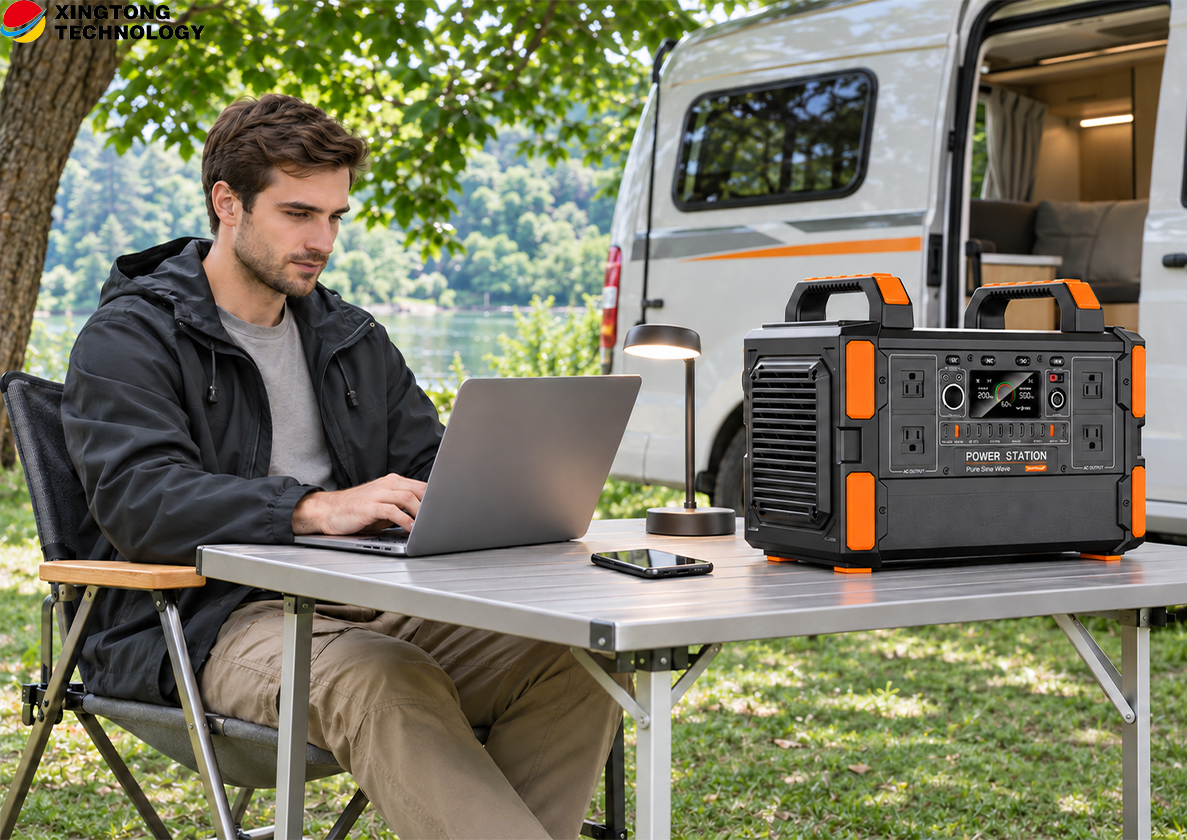
1. Understanding 1200W Output and 1008Wh Capacity
Output power and battery capacity describe different aspects of a portable power station.
1200W rated AC output indicates the continuous AC power the inverter is rated to supply. When connecting several AC devices, their combined running demand must remain within this rating.
1008Wh battery capacity describes the battery’s rated stored energy. It provides a starting point for estimating operating time, rather than indicating how much power the inverter can deliver at once.
A larger battery generally supports longer operation at the same load. A higher output rating supports a greater simultaneous power demand. Buyers should assess both values when comparing products.
2. How to Estimate Operating Time
A basic runtime calculation is:
Estimated runtime (hours) = Energy available to the load (Wh) ÷ Average load (W)
For AC operation, the available energy is lower than the battery’s rated capacity because the inverter and other internal components consume energy.
For a calculation example, assume that 80% of the rated 1008Wh reaches the connected load:
1008Wh × 0.80 = 806.4Wh
| Average connected load | Illustrative operating time |
|---|---|
| 100W | Approximately 8.1 hours |
| 200W | Approximately 4.0 hours |
| 500W | Approximately 1.6 hours |
| 1000W | Approximately 0.8 hours |
These figures are calculation examples, not measured runtime results. The 80% factor is an illustrative assumption, not a confirmed efficiency rating for this model.
Actual operating time depends on the initial battery charge, load behavior, conversion losses, internal consumption, temperature and battery condition.
For equipment that switches on and off, use measured average energy consumption over a representative period rather than assuming that its nameplate power is drawn continuously.
3. Checking Appliance Compatibility
Start by listing the devices that will operate simultaneously and adding their running power.
For example, an assumed combination of:
- A laptop drawing 70W.
- An LED light drawing 20W.
- A monitor drawing 50W.
Produces a combined running load of:
70W + 20W + 50W = 140W
Using the same illustrative energy assumption:
806.4Wh ÷ 140W ≈ 5.8 hours
This calculation estimates operating time only. Compatibility also depends on the required voltage, frequency and connection type.
Appliances with motors or compressors may require additional power during startup. For refrigerators, pumps and similar equipment, confirm both the appliance’s starting requirements and the power station’s documented surge capability before selecting a unit.
4. Selecting Output and Charging Configurations
The 1200W portable power station supplied by Anhui Xingtong Technology Co., Ltd. features a 1008Wh LiFePO4 battery, a pure sine wave inverter and AC, DC, USB-A and USB-C outputs.
Each interface has its own operating limits. Confirm the voltage, current and power available from the selected port, together with the permitted combined output.
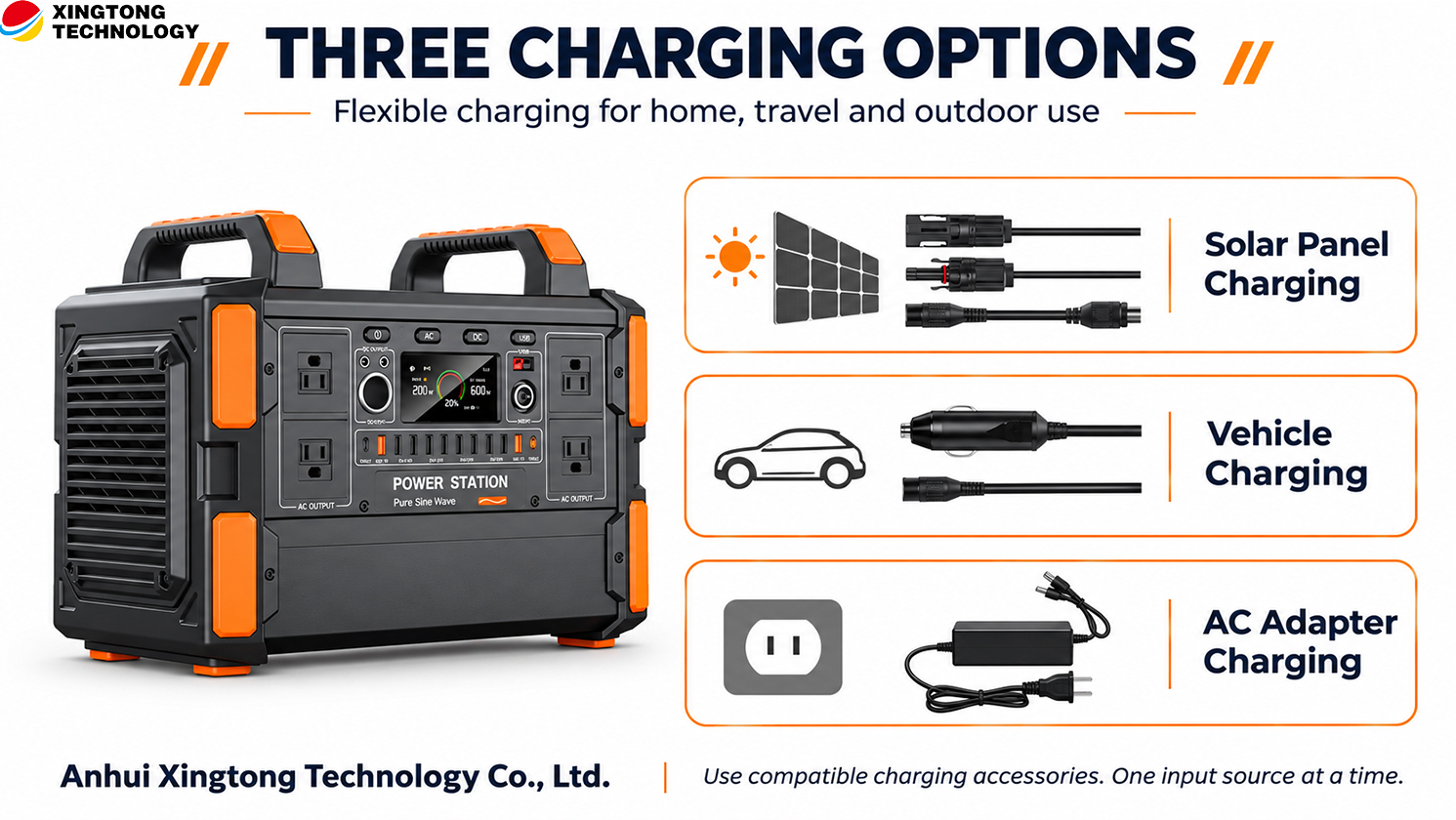
Charging options include:
- A matched AC adapter.
- Compatible solar panels.
- A vehicle power supply.
For solar charging, panel voltage, current, power and connector compatibility must match the unit’s input specifications. Panel wattage alone is insufficient to confirm compatibility.
The product page lists 110V / 60Hz and 230V / 50Hz configurations. Buyers should confirm the required version, socket standard, charging cables and included accessories before ordering.
5. Preparing a Purchase Specification
A clear application description helps suppliers assess suitability and prepare an accurate quotation.
Provide the following information:
| Required information | Details to provide |
|---|---|
| Destination market | Country, AC voltage, frequency and socket standard |
| Equipment list | Device names, running power and starting requirements |
| Simultaneous load | Equipment that will operate at the same time |
| Required runtime | Expected hours of operation between charges |
| Charging method | AC adapter, solar or vehicle charging |
| Supply scope | Required cables, adapters and other accessories |
| Purchase quantity | Sample quantity or planned bulk order |
Product Information and Purchasing Support
Anhui Xingtong Technology Co., Ltd. supplies portable power stations for distributors, importers and business customers. Our team can help confirm specifications, output configurations, charging accessories and order requirements.
For application assessment, please send your equipment list, required operating time, destination country and purchase quantity.
Email: info@xingtong-tech.com