 Anhui Xingtong Technology Co., Ltd.

A solar carport provides covered parking and uses the canopy to generate electricity. Adding EV chargers allows drivers to charge while they park. For commercial properties, industrial parks and fleet depots, planning starts with three things: the parking layout, how drivers use the site and how much electrical capacity is available.
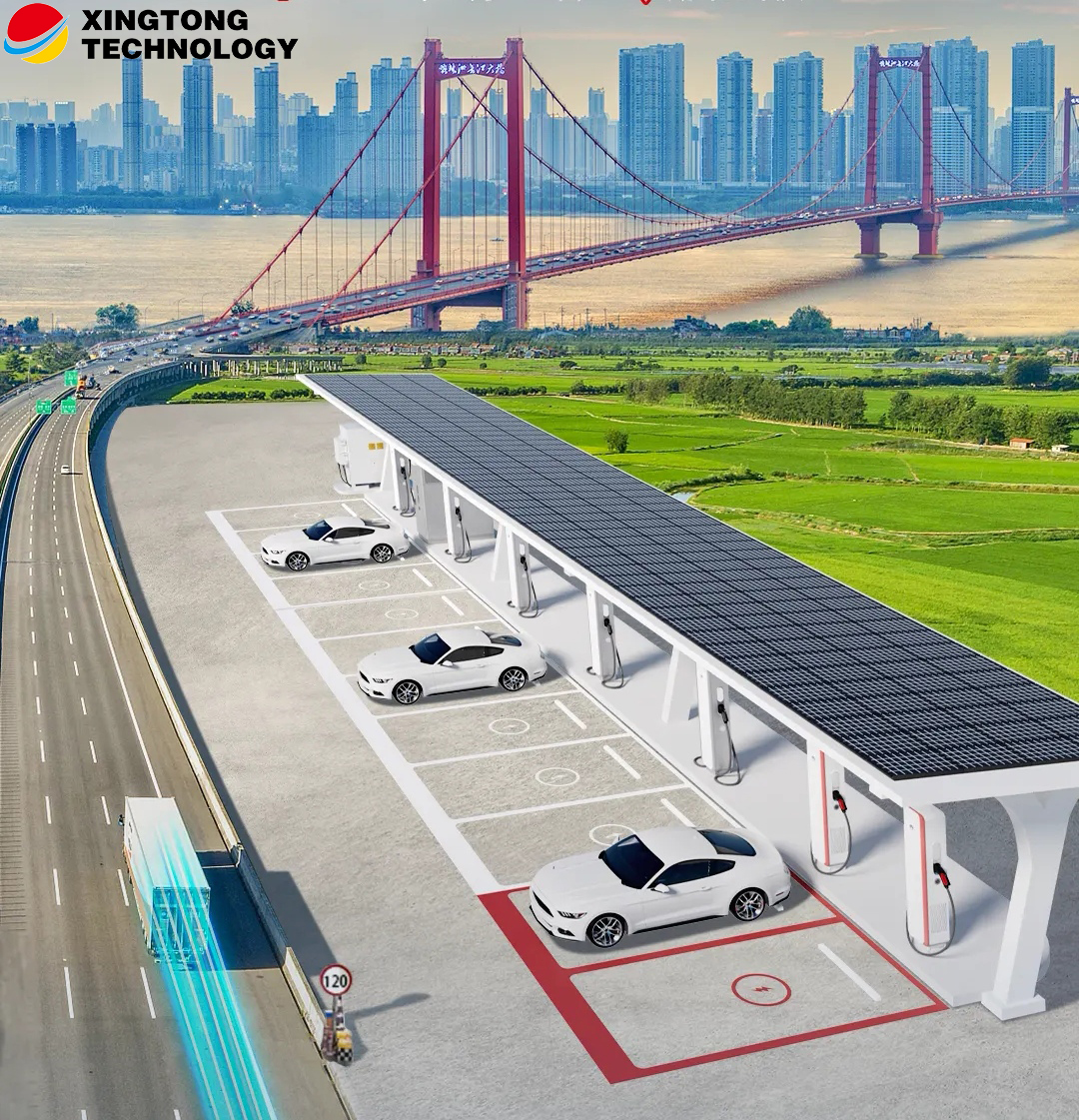
Start with the Parking Layout
Use the site plan to identify which bays the canopy can cover and which bays need chargers. Allow room for vehicles to turn and park when positioning the columns and chargers. The usable canopy area and shading help determine how much solar PV can be installed.
Choose Chargers Based on Parking Time
AC charging can suit workplaces where vehicles stay parked for several hours. DC charging may be more suitable for sites that need a faster turnaround. Estimate how many vehicles will charge at the same time and check whether the site can support that load.
Plan the Electrical Connection
When the solar array and chargers share the same site electrical system, daytime solar generation can cover part of the charging demand when the two overlap. The electrical design should account for how the PV system and chargers will connect and how much power the grid connection can supply.
Planning a solar carport with EV charging? Share your project location, parking layout, planned number of charging bays and available electrical capacity with Anhui Xingtong Technology Co., Ltd. at info@xingtong-tech.com. We can help you review the layout and discuss suitable carport and charger options.